Hexa Away
- 4.3
- Rating
- 5.00M
- Installs
- Free
- Price

 Analysis by App-foxy
I spent time with Hexa Away as a straightforward puzzle game built around arranging hexagon tiles in the correct order. Its central idea is easy to understand, but the appeal comes from how quickly a simple board can demand careful planning. I found myself opening it for a short mental break, then staying longer than expected because one awkward tile kept making the whole arrangement feel unfinished.
GOODROID,Inc. is the developer, and the game sits in the puzzle category for Everyone. It is free to download, with optional in-app purchases ranging from $0.99 to $16.99 per item. That makes it easy to try without committing money first, although anyone who dislikes purchase prompts or optional spending should pay attention while playing.
How the tile puzzles feel in everyday play
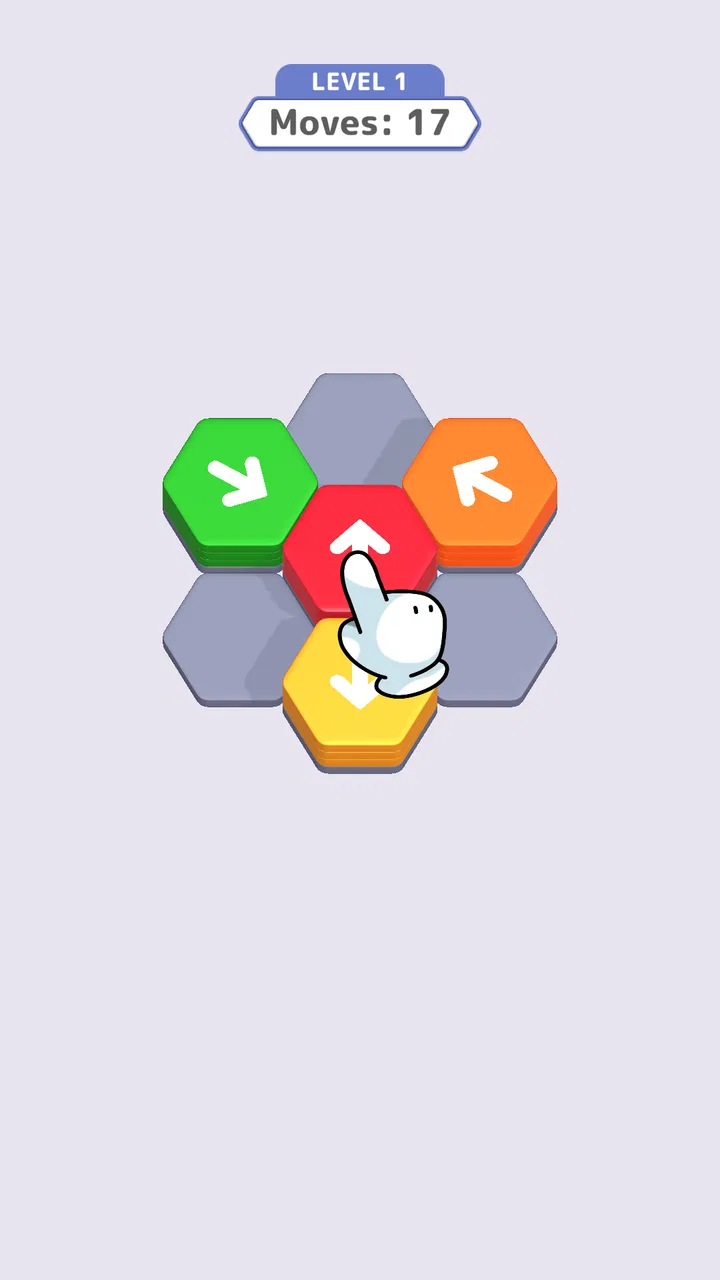
The basic task is to move the hexagon tiles into order. That wording sounds modest, yet the shape of the board gives the challenge its character. Hexagons fit together in a way that makes a move feel connected to several neighboring pieces, so I could not always judge a decision by looking at one tile alone. A placement that seemed correct often affected the route for the next few pieces.
You May Also Like

 Blood Strike: 2.5 Anniversary
Blood Strike’s Loadouts Turn Every Drop Into a Tactical Gamble
A close look at Blood Strike’s custom loadouts: how fast access to signature weapons reshapes its battle royale rhythm, rewards preparation, and narrows the gap between fights.

 Pandora - Music & Podcasts
Pandora’s Music Is Easy to Start, but Harder to Recover
Pandora’s strength is its low-effort path from a seed to a station. Its weak spot is how much confidence it asks you to place in connection, setup, and quiet recovery.

 8 Ball Pool
 Is Built on Rivalries, Rematches, and Routine
A close look at the rivalries, rematches, shared routines, and unanswered safety questions that turn a quick pool match into a persistent mobile community.

 Samsung Music
’s Quiet Strength Is Playing What You Already Own
Its reach comes less from spectacle than from dependable access to a personal library. That simplicity is both the app’s strongest retention engine and its ceiling.

 AccuWeather: Weather Radar
AccuWeather Review: A Quick, Clear Forecast for Everyday Decisions
For everyday plans, the best forecast is the one you can understand quickly. AccuWeather makes rain timing, radar, and local conditions easy to act on, with a few trade-offs.

 Hill Climb Racing
Why Hill Climb Racing Still Turns Crashes Into One More Run
A tiny car, a bumpy hill and one more upgrade: Hill Climb Racing keeps resurfacing because its simple chaos makes every near-miss feel personal.
More From Our News Desk



That makes the game a good match for players who enjoy visual organization rather than word clues, arithmetic, or fast reactions. I did not approach it like an action game. The satisfying part was pausing, scanning the board, and deciding which tile should be handled first. If you prefer puzzles where patience matters more than speed, this design is much closer to your taste than a timed matching game.
The most useful way to play is to avoid moving tiles simply because they are nearby. I found better results by identifying the pieces whose final positions were easiest to recognize, then using them as anchors. Once those anchors were settled, the remaining routes became less confusing. This is a small change in approach, but it prevents the common mistake of making several attractive moves without creating real progress.
Another practical habit is to inspect the open paths before touching anything. Hexagonal layouts can hide the consequences of a move because the board looks compact. I learned to look for the tile that was blocking several others instead of immediately chasing the piece that appeared closest to its destination. That way of thinking is especially helpful when the board becomes visually crowded.
Why it feels quick to start
Hexa Away has the kind of premise that needs very little explanation. I could understand the objective almost immediately, which matters when I wanted a game for a short break rather than a long session of learning rules. There is no need to memorize a complicated control scheme before the puzzle becomes interesting.
Its perceived speed comes less from rapid animation and more from the low barrier between opening the game and making a meaningful move. A player can begin with a simple plan, notice a mistake, and adjust without spending much time on setup. That makes it suitable for waiting rooms, public transport, or the few minutes before bed.
Still, quick access does not mean every puzzle is quick to solve. A board can be easy to enter but slower to untangle. I sometimes reached a point where the next move was not obvious, and the game shifted from casual sorting to deliberate deduction. That change is welcome for puzzle fans, but it may frustrate someone expecting every round to remain effortless.
For a realistic everyday example, I would use it during a coffee break when I want something more engaging than scrolling but less demanding than a full game session. I can make a few moves, stop when work calls, and return with the board still providing a clear visual problem. It works better in that setting than a game that depends on remembering a long story or maintaining a fast rhythm.
What happens during longer or heavier sessions
The heavier moments are not about complicated controls; they come from mental load. When several tiles appear to have competing routes, I had to slow down and compare possibilities rather than rely on instinct. That is where the game earns its place as a puzzle rather than a simple sorting exercise.
I recommend treating a difficult board as a sequence of smaller problems. First, find a tile with a clearly identifiable destination. Next, check whether moving it will close an important route. Then reassess the whole board instead of assuming the original plan still works. This workflow reduced wasted moves for me and made the challenge feel more manageable.
A less obvious trade-off is that visual simplicity can make mistakes feel more personal. There are not many rules to blame when a board becomes stuck; usually, I had committed to a poor order of moves. Players who enjoy learning from their own decisions will appreciate that clarity. Players who want frequent surprises, power-ups, or dramatic changes in pace may find the experience too restrained.
During longer play, I also noticed the value of taking a short pause before restarting a line of thought. Looking away from the board for a moment helped me notice relationships I had overlooked. That is not a feature claim; it is simply the most effective way I found to handle the game’s visual density. The puzzle rewards a fresh scan more than frantic tapping.
Because the game is free, it is also worth deciding in advance how you feel about optional purchases. The listed purchase range runs from $0.99 to $16.99 per item, so the financial trade-off is not identical for every player. I would recommend trying the core experience first and setting a personal limit before buying anything. That keeps a relaxing puzzle from turning into an unplanned expense.
Stability, recovery, and returning to a puzzle
From my perspective, the important reliability question for this kind of game is whether it remains easy to pick up again after an interruption. Puzzle play is often fragmented, especially on a phone. A call, message, or change of location can break concentration, and returning should not feel like starting a completely different activity.
Hexa Away is naturally suited to interrupted play because its board communicates the current problem visually. When I came back after a pause, I could usually reconstruct my plan by checking the fixed pieces and the blocked paths. That is a practical strength compared with games that depend heavily on continuous timing or a chain of rapid actions.
I would still avoid making a difficult move immediately after reopening. My best recovery routine was to spend a few seconds reviewing the board without touching it. That small pause helped me remember which pieces were deliberate placements and which were temporary arrangements. It is particularly useful if you play in short bursts throughout the day.
On reliability more broadly, I judge it conservatively. The game’s simple puzzle format does not require the same kind of constant attention as an online competitive title, and that lowers the pressure around brief interruptions. However, players should keep their device software and available storage in reasonable condition, as they would with any mobile game. I would not choose it for a situation where losing a session would be unacceptable unless I had already confirmed how the current board is retained on my own device.
Device requirements and resource expectations
The minimum operating-system requirement is Android 6.0, which gives the game a broad compatibility range among Android phones and tablets. That is helpful if you are using an older device rather than a recent flagship. The game is also rated Everyone, so its presentation is aimed at a general audience rather than a mature one.
In practical terms, I would expect a tile-based puzzle to be less demanding than a visually intensive 3D game, but I would not turn that expectation into a promise about battery use, memory, or loading time on every phone. Device age, background apps, storage condition, and system software can all affect how any game feels. On an older handset, closing unnecessary apps before playing is a sensible precaution if the interface seems less responsive.
The game has passed five million installs and holds an average rating of 4.4 from around two hundred thousand ratings, with roughly 4.6 thousand written reviews. Those figures suggest that it has reached a substantial audience, but they do not replace personal testing on your particular device. A popular game can still feel different on a low-storage phone, a small screen, or a device with aggressive battery management.
Screen size can influence the experience more than raw power. Hexagonal pieces need to remain visually distinct, and a compact display may make the board feel tighter. On a tablet, the same arrangement may be easier to inspect, while a smaller phone can make careful scanning more important. I would choose a larger screen if you often struggle to distinguish neighboring shapes, not because the game requires advanced hardware, but because the puzzle depends on visual clarity.
Players who need a game that works comfortably on an older Android setup have a reasonable starting point here because Android 6.0 is the stated minimum. Players on iOS should check the relevant platform listing before downloading, since operating-system requirements can differ between platforms. In either case, the safest expectation is modest: a simple puzzle should be approachable, but exact performance belongs to the device you use.
Where it stands beside familiar puzzle alternatives
Compared with match-three games, Hexa Away is less about creating chains and more about preserving a logical order. There is no appeal for me in waiting for a lucky combination; the interesting question is whether I can read the board correctly. If you enjoy planning several moves ahead, this is a better fit than a puzzle driven mainly by cascading matches.
Compared with word puzzles, it replaces vocabulary with spatial reasoning. That makes it useful when I want a quiet challenge without reading clues or searching for definitions. On the other hand, players who enjoy language, trivia, or a strong sense of discovery may find the tile arrangement too narrow.
It also differs from fast block-placement games. Those alternatives often reward rapid recognition and flexible reactions, while this game gives me more reason to pause before committing. If you want an intense score chase, another puzzle type may provide more energy. If you want to work through a visual problem at your own mental pace, Hexa Away has the stronger case.
The trade-off is variety. A focused mechanic can be relaxing because it is easy to understand, but it can also feel repetitive if you need constant new rules. I would not recommend it as the only game on your phone for months of daily play unless you genuinely enjoy this particular style of ordering tiles. It works best as a dependable puzzle option, not necessarily as a complete entertainment library.
Who should download it, and who should pass
I would recommend it to people who like clean visual puzzles, short sessions, and the satisfaction of correcting a board through careful choices. It is also a good option for families looking for an Everyone-rated game with an objective that can be understood without a long tutorial. The free entry point makes trying it straightforward.
I would be more cautious if you dislike repetition, become annoyed by puzzles that require backtracking, or want constant action. The central task remains focused on arranging hexagon tiles, so the game will not suddenly become a racing challenge or a story adventure. If your ideal mobile game depends on social competition, deep character progression, or elaborate exploration, this is probably not the right download.
It may also be a poor choice for anyone who wants to avoid all optional spending. The game is free, but the presence of in-app purchases means you should treat it as a free-to-start experience and review your purchase settings before handing the phone to a child. That is a small practical step, but it matters more than the word “free” by itself.
The current version is 3.3.0, and the game was released on May 23, 2024. Those details help identify the edition being discussed, especially if you find similarly named tile games while browsing. I would still check the version shown on your device after installation, since mobile software can change over time.
My performance verdict after playing
My overall impression is that Hexa Away succeeds because it does not overcomplicate its central puzzle. It starts quickly, asks for visual attention rather than reflexes, and fits naturally into short breaks. The strongest part is the gradual shift from obvious placements to boards where order and restraint matter.
Its limitations are equally clear. The focused format may become repetitive, difficult boards can demand more concentration than the friendly premise suggests, and optional purchases mean “free” should not be read as completely cost-free in every situation. Device performance will also depend on the Android phone or tablet you use, even though the stated minimum is Android 6.0.
With an average of 4.4 and more than five million installs, it has clearly found a large audience, but popularity is not the reason I would suggest it. I would suggest it because the tile-ordering idea gives me a calm, repeatable challenge that is easy to pause and resume. If you enjoy solving by observation, not by luck, this is a puzzle worth trying.
For me, it is best as a compact mental reset: open the board, identify an anchor, protect the useful paths, and only then commit to the next move. That approach makes the experience more rewarding and reduces the frustration of random rearranging. If that rhythm sounds appealing, GOODROID,Inc.’s game is a sensible addition to a puzzle collection; if you need constant novelty or high-energy competition, your time is better spent elsewhere.
FAQs for Hexa Away
01What is Hexa Away, and what are its main features?
Hexa Away is an engaging puzzle game that challenges players to match hexagonal tiles in a grid to clear levels. Key features include vibrant graphics, intuitive controls, multiple levels of difficulty, and a competitive leaderboard. It also offers a relaxing soundtrack and offline play, making it an ideal choice for casual gaming on the go.
02Is Hexa Away free to play, or does it have in-app purchases?
Hexa Away is free to download and play, offering a substantial number of levels without cost. However, it includes in-app purchases for additional hints, level packs, and to remove ads. These purchases are optional and designed to enhance the gaming experience, but they are not necessary to progress through the game.
03What are the system requirements for Hexa Away on Android and iOS?
For Android, Hexa Away requires version 5.0 or higher, ensuring compatibility with most modern devices. On iOS, it requires iOS 11.0 or later. The game is optimized to run smoothly on both platforms, but users should ensure they have adequate storage space and a stable internet connection for initial download and updates.
04Does Hexa Away offer any multiplayer or social features?
Hexa Away includes social features where players can connect their game to social media accounts. This allows them to share achievements and challenge friends. However, it is primarily a single-player game, focusing on individual puzzle-solving skills rather than multiplayer gameplay, which makes it perfect for solo play.
05Are there any accessibility features in Hexa Away for differently-abled users?
Hexa Away is designed with accessibility in mind, offering features like adjustable text sizes and a color-blind mode to enhance visibility. The game also features simple touch controls and an easy-to-navigate interface, ensuring that it is accessible to a wide range of players, including those with different abilities.
Pros
- Intuitive user interface for easy navigation.
- Engaging and challenging gameplay levels.
- Regular updates with new features.
- Lightweight app with fast load times.
- Offline mode available for on-the-go play.
Cons
- Limited customization options for players.
- In-app purchases can be expensive.
- Occasional ads disrupt gameplay.
- Requires frequent updates for bug fixes.
- No multiplayer or social features.

Hexa Away
Gallery